


Introduction
Financial markets are characterized by cycles of optimism and pessimism, each with distinct economic, psychological, and strategic implications for investors. While periods of growth, often referred to as bull markets, tend to attract attention and enthusiasm, downturns are an inevitable part of the investment landscape. Among these downturns, the bear market is perhaps the most discussed and feared phenomenon. Defined by significant and prolonged declines in asset prices, bear markets test the resilience of both economies and individual investors.
Understanding bear markets is crucial for anyone involved in financial decision-making, whether as an active trader, long-term investor, or simply a participant in retirement savings plans. Knowing what a bear market is, why it happens, and how to navigate one can help mitigate financial losses, reduce emotional stress, and even uncover opportunities amid the uncertainty.
This article will explore the concept of a bear market in depth, examine its causes and characteristics, and present strategic approaches to surviving—and potentially thriving—during these challenging times.
Understanding the Bear Market: Definition, Characteristics, and Historical Context
A bear market refers to a prolonged period during which securities prices fall by 20% or more from recent highs, often accompanied by widespread investor pessimism and negative economic sentiment. This definition applies across various asset classes, including stocks, bonds, commodities, and even cryptocurrencies.
1.1 The Origins of the Term “Bear Market”
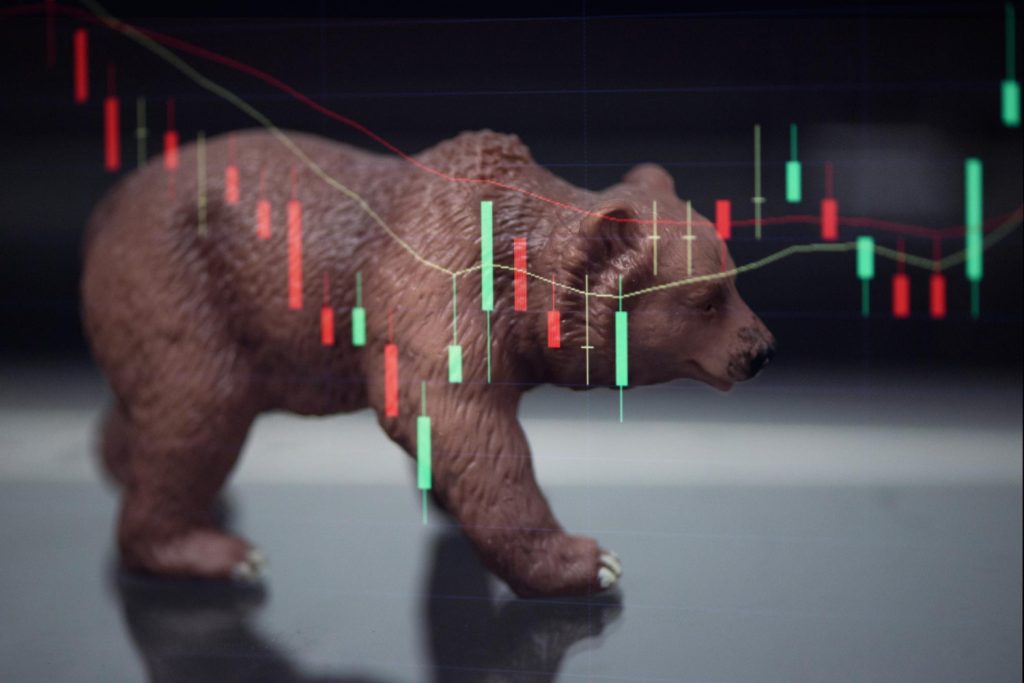
The metaphor of the bear is drawn from the way the animal attacks its prey—swiping its paws downward—symbolizing the downward trend of asset prices. The term contrasts with “bull market,” where the bull thrusts its horns upward, symbolizing rising prices. This imagery has been part of market vernacular for centuries, with its roots tracing back to 18th-century England, where speculative trading in bear and bull contracts became common.
1.2 Common Characteristics of Bear Markets
Bear markets typically share several core features:
- Sustained Price Declines: A drop of 20% or more over weeks or months.
- Negative Investor Sentiment: Pessimism drives further selling pressure.
- Economic Weakness: Often, but not always, tied to recessions.
- Volatility Spikes: Price swings become more extreme and unpredictable.
- Low Trading Volumes: Many investors retreat from the market, reducing liquidity.
Not all bear markets are identical—some are short-lived corrections, while others are deep, prolonged downturns that last for years.
1.3 Historical Examples of Bear Markets
Several historical bear markets illustrate the phenomenon’s scale and consequences:
- The Great Depression (1929–1932): The Dow Jones Industrial Average fell nearly 90% from its peak, marking one of the most severe economic collapses in history.
- Dot-Com Bust (2000–2002): The NASDAQ Composite lost around 78% of its value after the technology bubble burst.
- Global Financial Crisis (2007–2009): Triggered by the U.S. housing market collapse and subsequent banking crisis, major indices lost over 50% of their value.
- COVID-19 Crash (Feb–Mar 2020): A rapid but short-lived bear market caused by the global pandemic, with markets rebounding quickly after stimulus measures.
Each of these periods offers lessons in market behavior, policy response, and investor psychology.
Causes and Psychology Behind Bear Markets
Bear markets rarely occur in isolation; they are typically the result of multiple interrelated factors—economic, political, and psychological—that converge to drive prices downward.
2.1 Economic Triggers
Some of the most common economic causes include:
- Recessions: Declines in GDP, rising unemployment, and reduced consumer spending.
- High Inflation: Erodes purchasing power and can prompt aggressive interest rate hikes.
- Rising Interest Rates: Makes borrowing more expensive, dampening corporate investment and consumer spending.
- Corporate Earnings Declines: Lower profits lead to reduced investor confidence.
- Commodity Price Shocks: Sudden increases in oil or other key inputs can strain economies.
2.2 Geopolitical and External Shocks
Events such as wars, political instability, pandemics, and trade disputes can trigger bear markets by creating uncertainty and disrupting global supply chains.
2.3 The Role of Market Sentiment and Psychology
Investor psychology plays a central role in the progression of a bear market. The concept of herd behavior—where individuals mimic the actions of a larger group—can amplify price declines. Once fear takes hold, selling can become self-reinforcing.
The cycle of market emotions typically moves from optimism to excitement, then anxiety, fear, and capitulation (when investors sell out of despair). This psychological component means that even in the absence of extreme economic conditions, fear alone can sustain a bear market.
2.4 Bear Markets vs. Corrections
A market correction is a shorter-term decline of 10–20%, often followed by a quick recovery. Bear markets are deeper and longer-lasting, usually requiring a significant change in economic or policy conditions before reversing. Understanding this distinction helps investors avoid overreacting to smaller market dips.
3. Strategies to Survive and Thrive in a Bear Market
While bear markets can be daunting, they are not inherently destructive for disciplined investors. In fact, many fortunes are built by those who take a measured, strategic approach during downturns.
3.1 Maintain a Long-Term Perspective
The most critical strategy is to remember that markets are cyclical. Historically, every bear market has eventually been followed by a recovery, often leading to new all-time highs. Investors with long-term horizons should avoid panic selling and instead focus on their overall financial goals.
3.2 Diversify Your Portfolio
Diversification spreads risk across various asset classes, sectors, and geographies. In a bear market, some assets—such as gold, U.S. Treasury bonds, or defensive stocks—may hold their value better than others. A balanced portfolio can help cushion the blow from equity declines.
3.3 Reassess Asset Allocation
A bear market provides an opportunity to review whether your portfolio’s risk profile matches your time horizon and risk tolerance. Adjusting the mix between equities, fixed income, and alternative investments can enhance resilience.
3.4 Keep Cash Reserves
Holding cash or cash equivalents during uncertain times not only provides a safety net but also creates the flexibility to invest when asset prices are significantly discounted.
3.5 Dollar-Cost Averaging (DCA)
This strategy involves investing a fixed amount at regular intervals, regardless of market conditions. During a bear market, DCA allows you to purchase more shares when prices are low, reducing your average cost over time.
3.6 Focus on Quality Investments
High-quality companies with strong balance sheets, stable cash flows, and competitive advantages are more likely to weather downturns successfully. Defensive sectors like healthcare, utilities, and consumer staples often outperform in bear markets.
3.7 Avoid Emotional Decision-Making
Making investment decisions based on fear or greed can lead to poor outcomes. Avoid frequent portfolio changes driven by short-term news and instead stick to a well-thought-out investment plan.
3.8 Consider Tax-Loss Harvesting
Selling losing investments to offset gains elsewhere in your portfolio can provide tax benefits, effectively reducing your overall loss. However, this strategy should be executed with a clear understanding of tax rules.
3.9 Learn from Historical Patterns
Reviewing past bear markets can provide perspective and help identify potential opportunities. While no two market downturns are identical, they often follow recognizable patterns in terms of duration, depth, and recovery phases.
Conclusion
Bear markets, though unsettling, are an integral part of the investment cycle. They arise from a complex interplay of economic forces, geopolitical events, and investor psychology, and their effects can be profound. Yet history demonstrates that downturns are temporary and often pave the way for periods of significant growth.
Surviving a bear market requires a blend of discipline, patience, and strategic thinking. By maintaining a long-term perspective, diversifying investments, managing risk proactively, and resisting the urge to act on fear, investors can not only protect their wealth but also position themselves to capitalize on future opportunities.
Ultimately, the key to navigating a bear market lies in preparation rather than prediction. Markets will always experience cycles of expansion and contraction, but those who remain steady in their approach are best equipped to endure the storm and emerge stronger when the next bull market inevitably begins.