


Introduction
In an increasingly interconnected world, global remittances have become a lifeline for millions of families and economies. Every year, hundreds of billions of dollars flow across borders as migrant workers send money back home to support their families. Despite the vital role of remittances in global economic stability, traditional money transfer systems have been fraught with inefficiencies, high costs, slow transaction times, and limited accessibility. For many developing nations, these limitations undermine the financial benefits that remittances could provide.
Blockchain technology, initially popularized as the underlying framework for cryptocurrencies such as Bitcoin, has emerged as a revolutionary solution that promises to address these challenges. By offering a decentralized, transparent, and secure way to transfer funds globally, blockchain has the potential to disrupt the remittance sector profoundly. Its impact extends beyond mere cost savings; it redefines the very nature of cross-border transactions, financial inclusion, and economic empowerment. This essay explores blockchain’s transformative role in global remittances, examining its potential to improve efficiency, reduce costs, enhance transparency, and create a more inclusive financial ecosystem.
Reducing Costs and Increasing Efficiency
One of the most immediate and tangible impacts of blockchain on global remittances is its potential to significantly reduce transaction costs. Traditional remittance channels, such as banks and money transfer operators like Western Union or MoneyGram, charge substantial fees—often ranging from 5% to 15% of the transferred amount. These fees disproportionately affect low-income households, eroding the value of the money sent home.
Blockchain technology mitigates these issues by eliminating the need for intermediaries. Traditional cross-border transfers often involve multiple banks and clearing systems, each adding processing fees and delays. Blockchain, in contrast, allows peer-to-peer transactions through decentralized ledgers, which operate on a consensus mechanism to validate and record transactions. For example, a migrant worker in the United States can send funds directly to their family in the Philippines using blockchain-based solutions, without routing the money through multiple banks or clearinghouses. This process reduces transaction times from days to mere minutes and decreases fees to a fraction of what traditional systems charge.
Several blockchain-based remittance platforms, such as RippleNet and Stellar, have demonstrated these advantages in real-world scenarios. RippleNet, for instance, uses its digital asset XRP to facilitate near-instantaneous cross-border payments with minimal fees. This not only increases the efficiency of the transfer but also provides a more predictable and reliable service for recipients who rely on these funds for basic necessities. Similarly, Stellar focuses on enabling micro-transactions and low-value transfers that were previously impractical due to high fees, unlocking financial opportunities for underserved populations.
Moreover, blockchain enhances efficiency through its programmable smart contracts. These self-executing contracts automate payments based on pre-defined conditions, reducing administrative overhead and minimizing human errors. For instance, remittance transactions can be programmed to automatically convert funds into the recipient’s local currency at the current exchange rate, eliminating delays caused by manual processing. By combining decentralization, low fees, and automation, blockchain has the potential to reshape the cost structure and operational efficiency of global remittances.
Enhancing Transparency and Security
Another critical area where blockchain impacts global remittances is in the enhancement of transparency and security. Traditional remittance systems often suffer from a lack of visibility, leaving senders and recipients uncertain about transaction status, delays, or hidden fees. Additionally, the centralization of financial data in banks or money transfer operators exposes sensitive information to potential breaches or fraud.
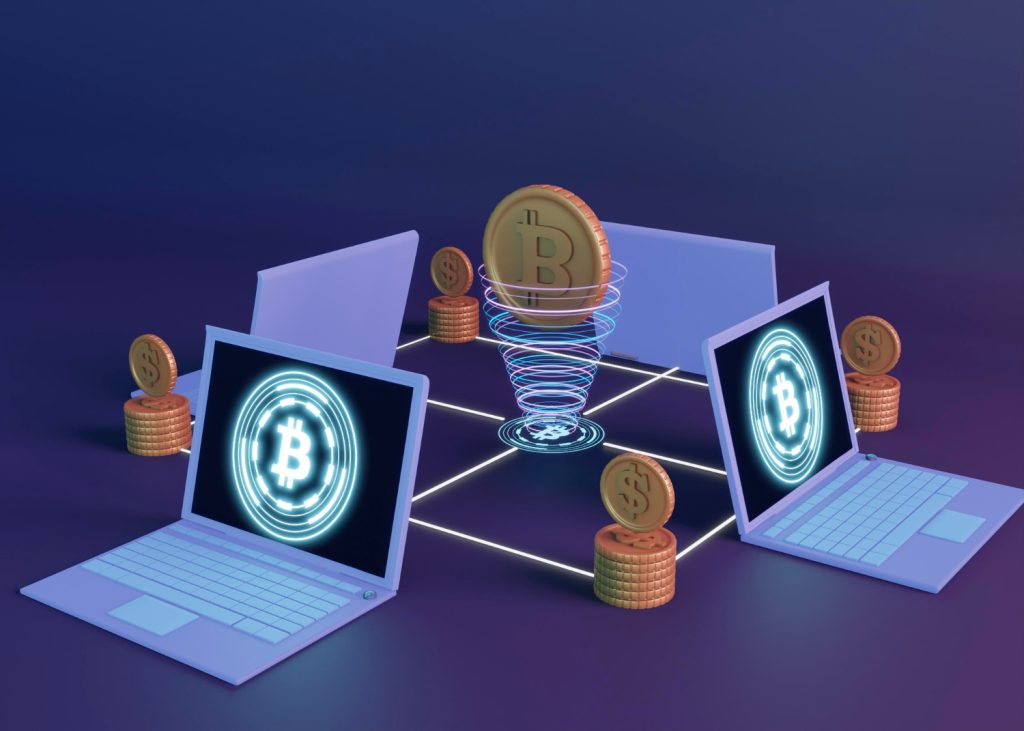
Blockchain addresses these challenges through its immutable ledger system. Every transaction recorded on a blockchain is cryptographically secured and permanently stored, ensuring that it cannot be altered or deleted. This transparency allows both senders and recipients to track the status of their transfers in real-time, reducing uncertainty and building trust. In addition, blockchain’s decentralized nature means that there is no single point of failure or vulnerability, enhancing the overall security of remittance transactions.
Security is particularly crucial in regions with unstable banking infrastructure or limited regulatory oversight. In countries where traditional banking is unreliable, blockchain provides an alternative method for securely transferring funds. For example, during political or economic crises, when banks may be closed or transactions frozen, blockchain-based remittances can continue to function uninterrupted. This resilience makes blockchain an invaluable tool for ensuring financial continuity in vulnerable communities.
Moreover, blockchain enables compliance with anti-money laundering (AML) and know-your-customer (KYC) regulations while preserving privacy. Platforms can implement cryptographic verification systems that authenticate users without exposing their sensitive information, striking a balance between security, regulatory compliance, and privacy. This is particularly important in cross-border transfers where regulatory frameworks differ widely between countries. By enhancing transparency and security, blockchain not only protects the interests of remittance senders and recipients but also fosters greater confidence in the global financial system.
Promoting Financial Inclusion and Economic Empowerment
Beyond cost reduction and security, blockchain has the potential to drive financial inclusion and economic empowerment for marginalized populations. According to the World Bank, nearly 1.7 billion adults worldwide remain unbanked, with the majority residing in developing countries. For these individuals, accessing formal financial services is often expensive, geographically limited, or bureaucratically complex. Remittances, therefore, become one of the few reliable sources of funds, but traditional transfer systems may not reach the most vulnerable recipients.
Blockchain technology addresses these barriers by providing a decentralized financial infrastructure that does not rely on conventional banks. Mobile wallets and blockchain-based apps allow recipients to receive, store, and even invest their remittances without a traditional bank account. For instance, in Africa, blockchain platforms like BitPesa enable users to send and receive funds using only a smartphone, bridging the gap between unbanked populations and the global financial system. This not only facilitates daily financial transactions but also opens opportunities for savings, credit, and entrepreneurial ventures.
Additionally, blockchain remittances can stimulate local economic development by keeping more money in the hands of recipients. Lower fees mean that more funds are available for household consumption, education, healthcare, and investment. Over time, this can have a multiplier effect, strengthening local economies and reducing dependence on external aid. Moreover, the transparency and traceability of blockchain transactions can support microfinance and community-driven projects, allowing donors, governments, or NGOs to monitor the flow of funds efficiently and ensure that they reach intended beneficiaries.
Finally, blockchain fosters inclusion by enabling access to global financial markets. Recipients of remittances can convert digital assets into other currencies or investment instruments with minimal friction, empowering them to participate in wealth creation activities that were previously inaccessible. This democratization of financial access can help reduce inequality, providing migrant workers and their families with the tools to achieve long-term economic stability.
Conclusion
Blockchain technology represents a transformative force in the world of global remittances. By reducing transaction costs, enhancing efficiency, improving transparency and security, and promoting financial inclusion, blockchain addresses many of the long-standing challenges that have limited the potential impact of cross-border money transfers. The implications are profound: families in developing countries can access more of the funds sent by migrant workers, local economies can benefit from increased liquidity, and the global financial system can operate with greater trust and resilience.
While challenges such as regulatory uncertainty, scalability, and digital literacy remain, the continued adoption of blockchain in the remittance sector signals a paradigm shift. As technology evolves and integration with traditional financial systems improves, blockchain has the potential to redefine the way money moves across borders, creating a more equitable and efficient global financial ecosystem. In an era where financial connectivity is crucial to human development, blockchain offers a promising pathway toward a future where remittances are not just transfers of money, but tools for empowerment and sustainable growth.